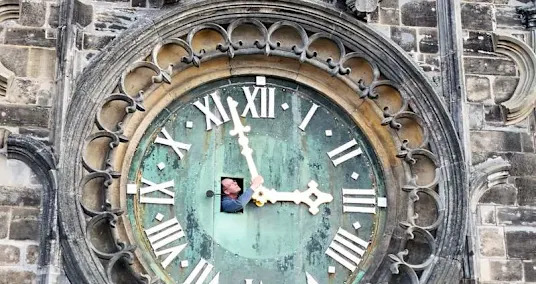
Clocks across the majority of European countries are set to go forward by one hour early on Sunday as the continent moves to daylight saving time, also known as summer time.
Clocks in most European nations including Germany advance by one hour at 2 am (0100 GMT) to 3 am, heralding longer evenings and brighter days.
This means that for the coming months parts of Europe will be on Central European Summer Time (CEST), before moving back to Central European Time (CET) in the autumn, when clocks go back again by an hour on October 25.
The aim of the change is to make better use of daylight in the shorter days of the winter in the northern hemisphere.
The signal for the automatic changeover of the clocks in Germany comes from the Federal Institute of Physics and Metrology (PTB) in the northern city of Braunschweig, also known as Brunswick in English.
The institute's experts ensure that radio-controlled clocks, station clocks and many industrial clocks are supplied with the signal via a long-wave transmitter called DCF77 in Mainflingen near Frankfurt.
LATEST POSTS
- 1
 Significant Elements to Consider Prior to Applying for a Mastercard: 6 Vital Contemplations
 - 2Parents search for children missing since a volcanic eruption in Colombia 40 years ago
- 3The Best 15 Applications for Efficiency and Association
- 4NASA satellite gazes into Medusa Pool | Space photo of the day for Dec. 24, 2025
- 5Daily Briefing: A bad flu season gets worse


- Figure out How to Pick a Crematorium: Key Contemplations.
- Rediscovering Experience Through Excursions: Individual Travel Stories
- 'The Real Housewives of Rhode Island' 1st teaser trailer unveiled: Which Bachelor Nation star is part of the cast? And when does it premiere?
- How to avoid or deal with an outrageous medical bill
- FDA updates risk classification for voluntary shredded cheese recall
- Whale stranded off Germany for days is stuck again
- Feeling wonder every day improves our health. Here’s how to do it.
- The Best Portable Applications for Emotional wellness and Prosperity
- Everyone knows F1 is for the girls. I wandered into the Las Vegas desert to find out why.